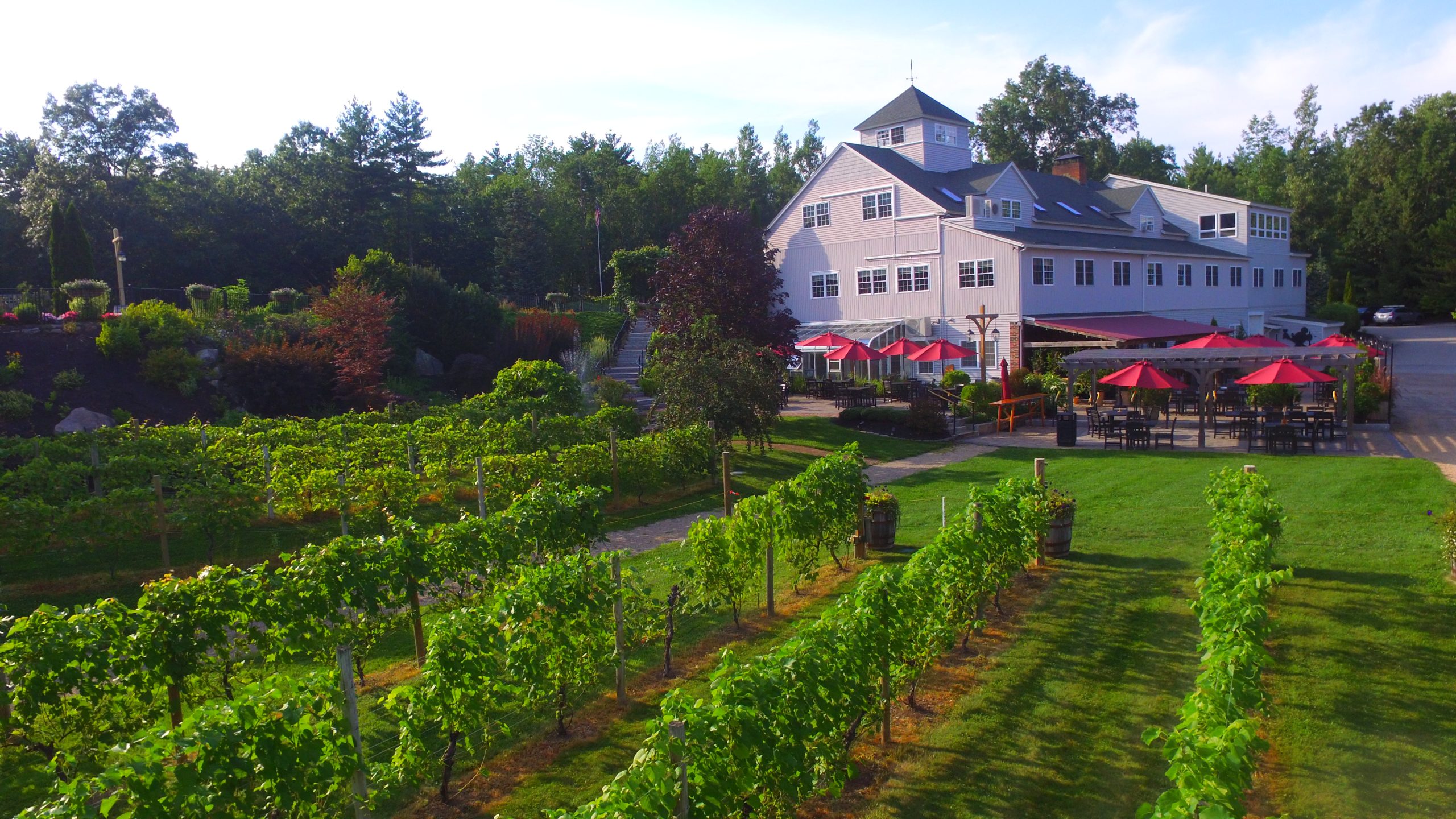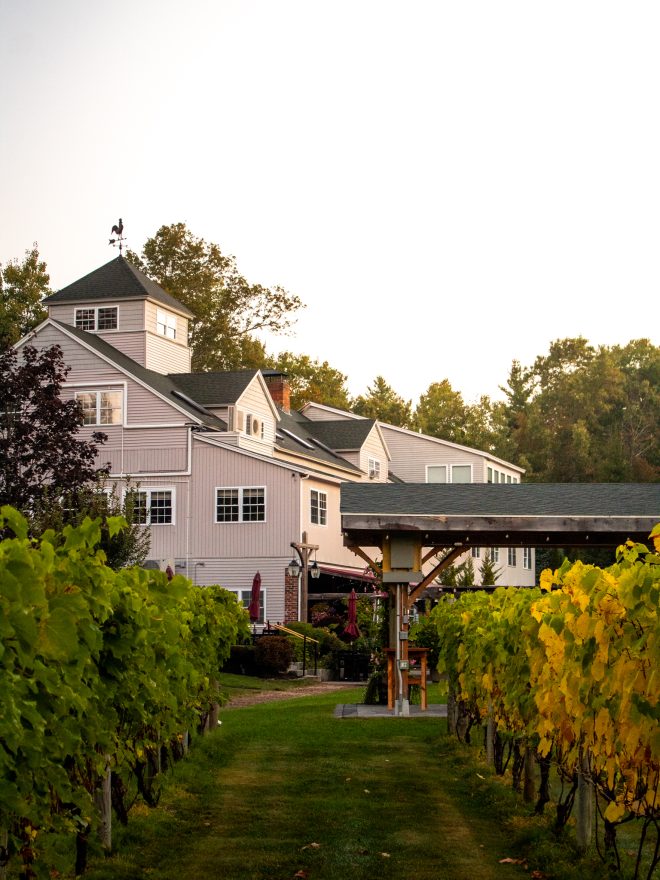
New England isn’t well known as a wine region. Our growing season is short, our soils rocky, and most wine grape varieties aren’t well suited to the climate. That has not, however, stopped people from trying. Over the centuries – and particularly the past five decades – farmers & vintners in New England have brought attention to the unique potential New England possesses for winemaking.
Northern New England
The upper New England states of Vermont, New Hampshire, & Maine have cold climates and long winters that mean a shorter growing season & dependence on cold hardy varieties, particularly hybrids. These varieties tend to be less sweet and more acidic. (We touched on the varieties grown in our own vineyard here). The limitations of the region have led to an increase in experimentation with fruit wines, all-natural wines, & wild fermentation – creativity that might have been impossible within the realm of traditional winemaking.
Wines to try:
- Heirloom Crabapple Wine – Hermit Woods Winery – Meredith, NH
- Apple Rosehip – Zorvino Vineyards – Sandown, NH
- Cybele – La Garagista – Barnard & West Addison, VT
Southern New England
The southern New England states of Massachusetts, Rhode Island, and Connecticut, on the other hand, have four officially recognized AVAs (American Viticultural Areas). These are designated wine grape growing regions within the US whose geographical makeup contributes certain characteristics to the finished product. For example, Chardonnay grown in central France versus Chardonnay grown in western Connecticut will taste different because the climates and soil compositions are different.
The Four AVAs
- Southeastern New England (est. 1984) – containing MA, CT, & RI
- Martha’s Vineyard (est. 1985) – it should be noted that are no longer any active vineyards on the island, the final one closed in 2008
- Western Connecticut Highlands (est. 1988)
- Eastern Connecticut Highlands (est. 2019)
These AVAs are predominantly defined by their proximity to the coast and subsequent maritime climate that produces more moderate temperatures than inland climates. This allows these southern New England states to grow more traditional wine grapes such as Chardonnay, Pinot Noir, Seyval Blanc, Riesling, Cabernet Sauvignon, & Marechal Foch.
Wines to try:
- Vidal Blanc – Sakonnet Vineyard – Little Compton, RI
- Whimsical White – Jones Winery – Shelton, CT
- Blanca White Port – Truro Vineyards – North Truro, MA
The Takeaway
Growing grapes and making wine in New England is far from easy and is a true testament to the love people have for the process and the dedication to the art of winemaking. There are so many ways to discover and appreciate the many vineyards and wineries scattered across this under-appreciated wine region of the US.
Get Exploring
- The Connecticut Wine Trail
- NH Winery Association
- The Coastal Wine Trail
- Rhode Island Wine Trail
- Maine Wine Trail