Let’s Recap!
It’s been a few months since our last Winemaking 101 post so let’s do a quick recap!
In the first steps of the wine making process, both red and white grapes undergo crushing and destemming. White grapes immediately go into the press to be turned into juice and are then pumped into stainless steel tanks for fermentation. Red grapes, however, are pumped into maceration tubs to sit on the skins for anywhere from 1 to 2 weeks.


So what happens during those two weeks?
Yeast is added to kickstart fermentation (this isn’t necessary and some winemakers will forgo this in favor of spontaneous fermentation, but adding it allows for more control & consistency). The yeast consumes the sugar in the grape juice and, in turn, creates alcohol & carbon dioxide.
Once the juice start fermenting, the carbon dioxide forces the grape skins to the top, forming a thick mass called a “cap.” About three to four times a day, we punch down the cap using a paddle to stir the skins back into the juice. This allows for more skin contact – necessary for both color & flavor – as well as releasing heat and excess carbon dioxide. We know fermentation has slowed when the carbon dioxide stops pushing the skins to the top, the cap becomes thin, and punching down becomes much, much easier.

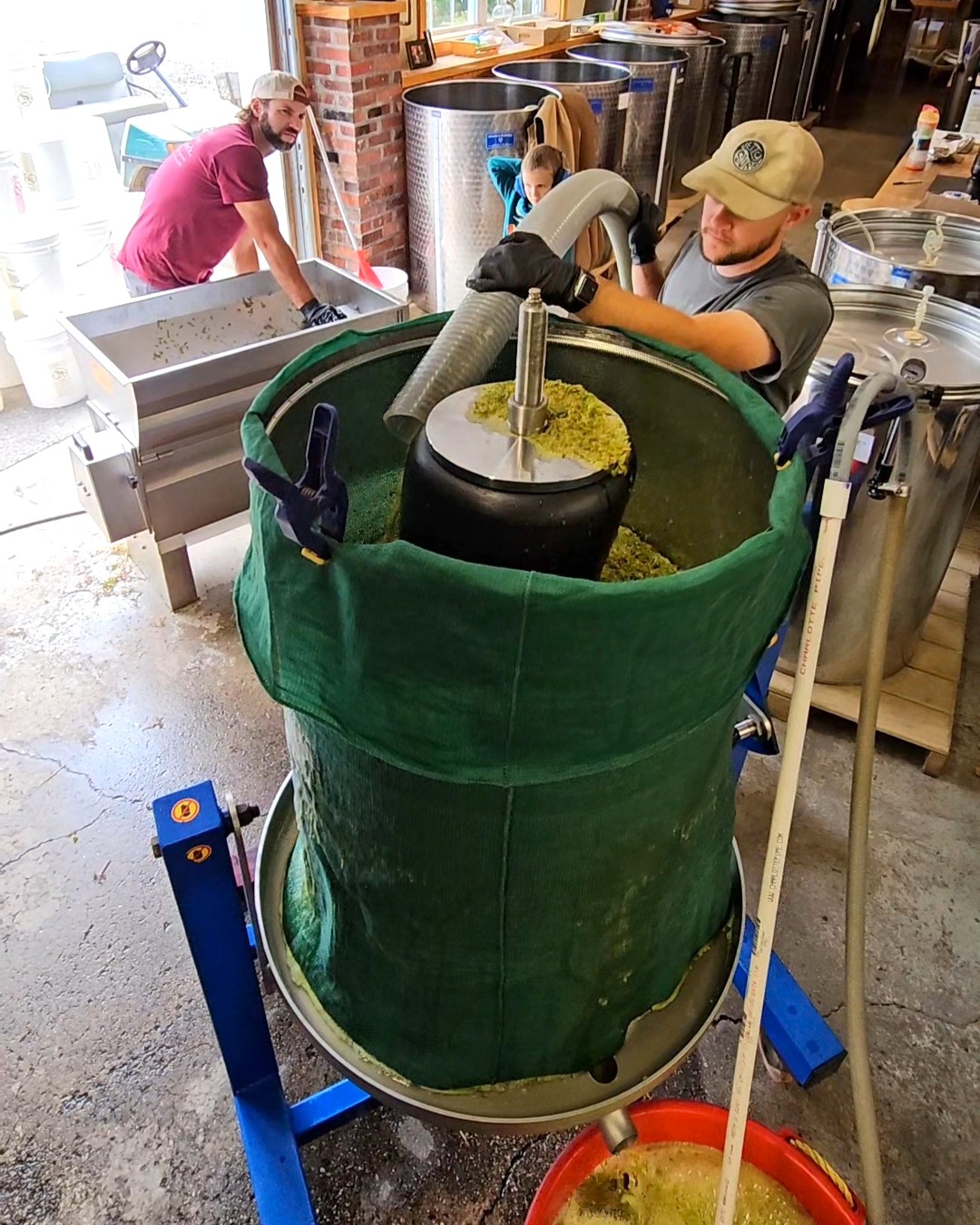
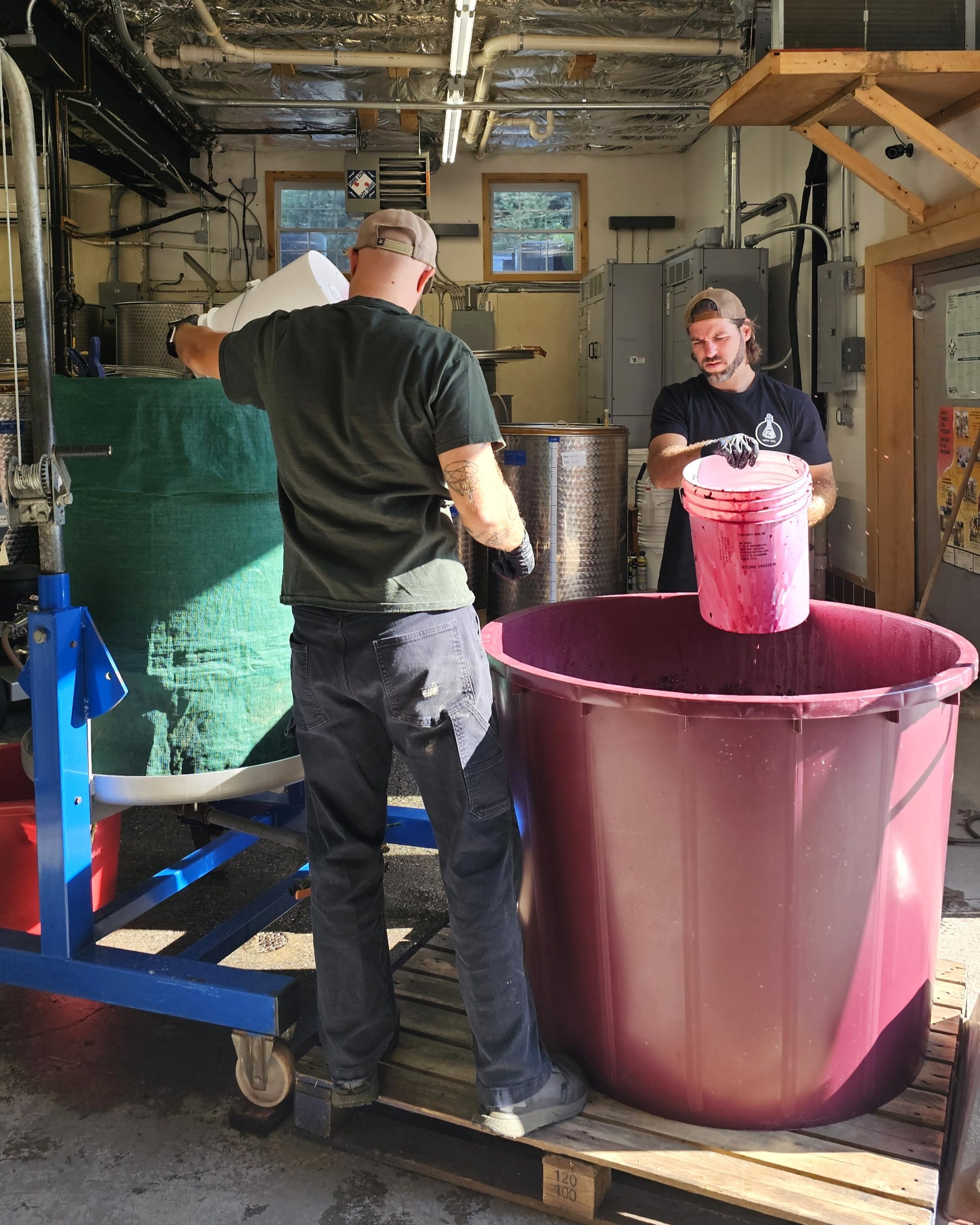
It’s time to press!
When the juice is done fermenting, we manually scoop buckets of skins & juice into our press. The inner bladder fills with air and squeezes the skin against the outer screen, allowing us to extract as much wine as possible. The wine flows out into a bucket and is then pumped into stainless steel tanks.
Up next: Racking & Malolactic Fermentation
From Harvest to Tanks